Hairline Cracks in Walls: How to Tell Cosmetic Plaster from Footing Movement
TL;DR
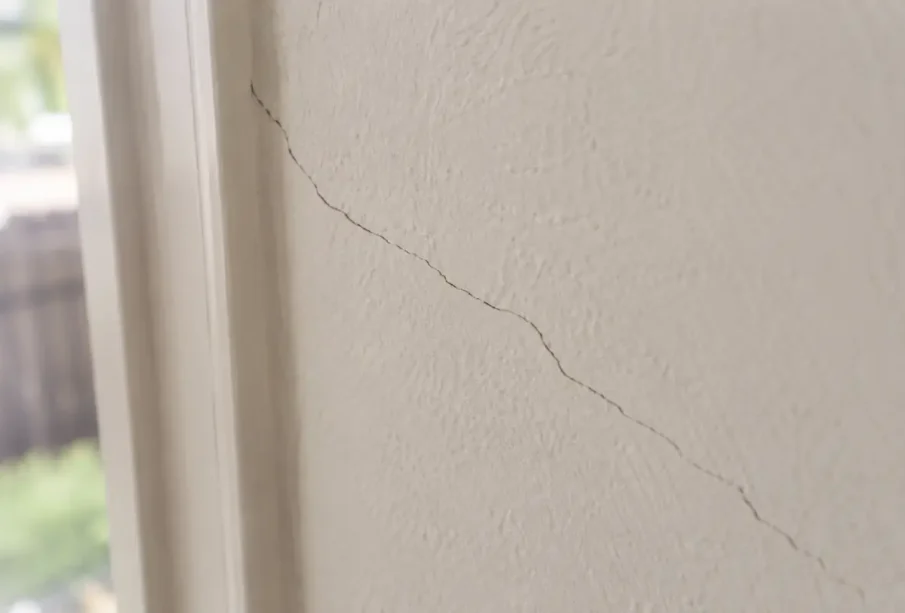
Under Australian Standard AS 2870, a true hairline crack is under 0.1 mm. Most cracks are cosmetic. What decides it is not the width on its own, but the pattern, whether it moves with the seasons, and what your Sydney home sits on.
In this guide
- What counts as a hairline crack
- Why your suburb changes the answer
- The five things that cause wall cracks
- Three tests to read your crack
- How to monitor a crack for 12 months
- Red flags: stop monitoring, start calling
- Your rights in NSW
- Preventing and repairing cracks
- The honest answer
- Questions Sydney owners ask
A crack has to be thinner than a sheet of copy paper to count as “hairline” under Australian Standards. Almost every crack people call hairline is already wider than that.
Sydney makes this harder than most cities. Half the metro area sits on shale clay that swells and shrinks. The other half sits on sandstone that barely moves.
Getting it wrong costs money both ways. Fill a moving crack and you destroy the evidence an engineer needs. Panic over a shrinkage crack and you pay for an inspection your builder owed you.
What counts as a hairline crack
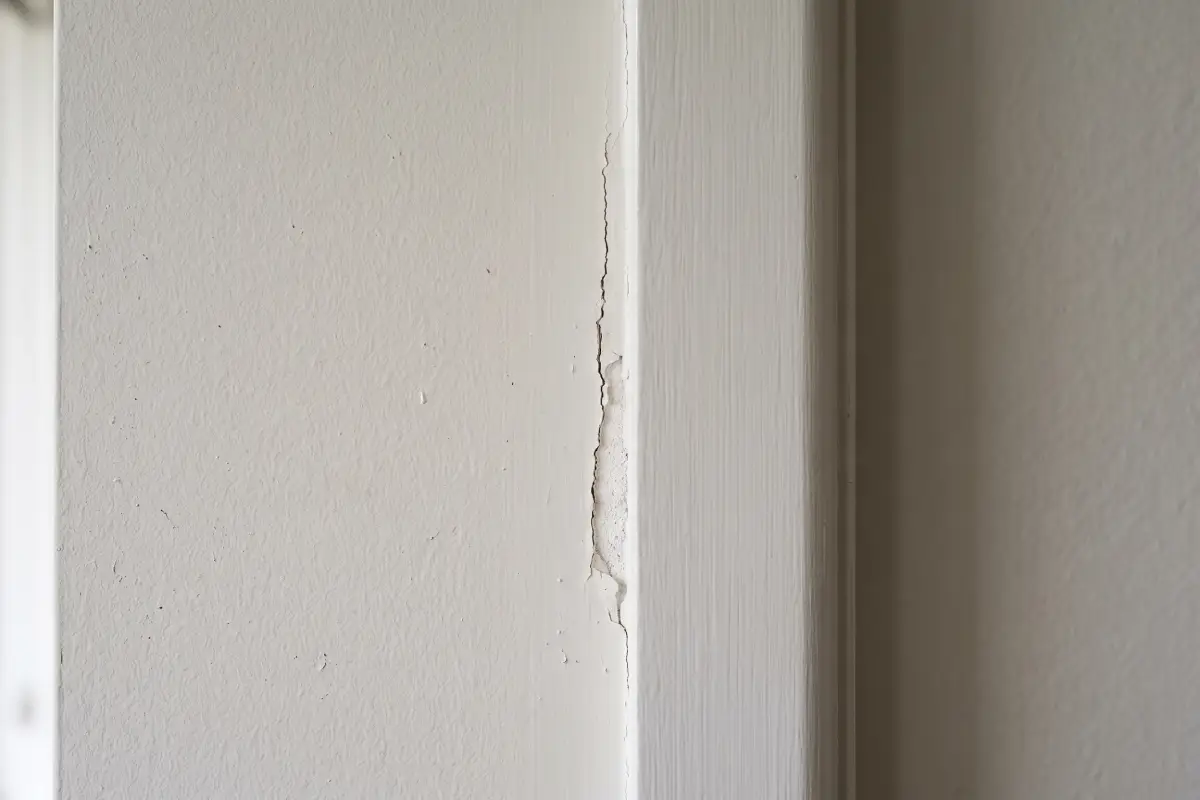
AS 2870-2011 sets five damage categories. NSW Fair Trading uses the same scale in its Guide to Standards and Tolerances, and so does NCAT. Learning it puts you in the same conversation as your builder.
| Category | Crack width | What you’d see | What to do |
| 0. Negligible | Under 0.1 mm | True hairline cracks | Nothing. Not a reportable defect. |
| 1. Very slight | Under 1 mm | Fine cracks needing no repair | Fill at your next repaint. |
| 2. Slight | Under 5 mm | Noticeable but easy to fill. Doors stick slightly | Monitor. NSW requires 12 months before calling it defective. |
| 3. Moderate | 5 to 15 mm, or several 3 mm cracks grouped | Doors and windows stick. Pipes can fracture. Weather gets in | Defective. Needs investigation and repair. |
| 4. Severe | 15 to 25 mm | Walls lean or bulge. Frames distort. Sections need replacing | Structural. Call an engineer now. |
Source: AS 2870-2011 Table C1, reproduced by CSIRO (2024) and NSW Fair Trading (2017).
Plasterboard has its own rule. After the first 12 months from handover, cracking in gyprock or hard plaster wider than 2 mm is defective in NSW.
Worth knowing: plasterboard is stable. It does not crack on its own in a hot summer. When it cracks, it is usually reporting movement in the frame or footings behind it.
Why your suburb changes the answer
Two identical homes, one in Kellyville and one in Bondi, behave completely differently. The reason is geology, not build quality.
Western and South-Western Sydney sit on Wianamatta Group shales, which weather into deep clay that swells when wet and shrinks when dry. The Northern Beaches, Hornsby plateau and much of the coastal strip sit on Hawkesbury sandstone, whose soils barely move.
Research for Subsidence Advisory NSW measured the gap. Ashfield Shale soils averaged a shrink-swell index of 2.1 %strain/pF unit, Bringelly Shale 1.3, and sandstone soils least of all.
Shale pockets also appear outside the west. NSW soil mapping records reactive, highly plastic clay subsoil at Strathfield, Auburn, Chatswood, Crows Nest, Dundas, Neutral Bay, St Ives and St Leonards.
Check your site classification. Every block gets one before construction: Class A (sand or rock) through S, M, H1, H2, E and P. It sits in the geotechnical report, usually in your council DA file. An H2 rating turns a Category 2 crack from strange into expected.
Recent weather did real damage. 2019 was Australia’s hottest and driest year on record. By October 2022, Sydney had passed 2,194 mm at Observatory Hill and set its wettest year since 1858. Clay shrank hard, then swelled hard. Homes designed for gentle seasonal movement got a decade of cycling in three years.
The five things that cause wall cracks
1. Shrinkage in a new build
Slabs cure, timber dries, jointing compound pulls back. You get fine straight cracks along plasterboard joins and at cornice mitres. These stop moving. Nail popping counts as a defect in the first 24 months.
2. Seasonal soil movement
Wet weather lifts the outer footings first, so the floor “dishes” and doors bind. Dry weather reverses it into a “dome”. The tell is reversibility: these cracks narrow and widen with the seasons.
3. Water in the wrong place
CSIRO warns that even a tiny leak can saturate clay, and saturated clay loses most of its bearing strength. Blame blocked gutters, unconnected downpipes, a dripping tap, or a cracked sewer line. Ageing fascias and guttering are a common source of that overflow, since corroded gutters and misaligned falls send water straight down the wall line instead of into the stormwater system.
4. Trees
Roots under a footing lift it. Roots beside one dry the clay and drop it. Removing a big tree can be worse than keeping it, because the soil rehydrates and heaves. Check your council’s tree preservation order first.
5. Structural change
Walls removed without approval, or extension footings at a different depth. In older Sydney brick homes, a rusting steel lintel expands and lifts the bricks above a window, leaving a horizontal crack. Termite damage belongs here too.
Three tests to read your crack
Width sets the category. Pattern tells you the cause.
Test 1: What shape is it?
- Straight cracks following plasterboard joins are a lining problem, not a structural one.
- Cracks at cornice mitres in corners are the classic seasonal soil symptom.
- Stair-step cracks through brick mortar, running diagonally from a window or door corner, mean the wall is bridging a footing that has moved.
- Cracks that taper, wider at one end, mean part of the wall has rotated.
- Horizontal cracks in brickwork deserve a call at any width.
Test 2: Does it show on both sides?
A crack visible inside and outside in the same spot has gone through the structure, not just the finish.
Test 3: What else has changed?
One crack is a crack. A crack plus other symptoms is a pattern. Look for binding doors, sticking windows, a marble that rolls across the floor, lifted tiles, a bowed roof ridge or bouncy floorboards.
How to monitor a crack for 12 months
NSW builds a formal 12-month monitoring period into its Category 2 assessment. Done properly, it either saves you an engineer’s fee or gives the engineer a head start.
- Mark the ends. A fine pencil line across each end, dated.
- Measure, don’t guess. A crack comparator card costs a few dollars at any hardware store.
- Photograph with a scale. Hold a ruler or 20c coin flat in frame, same spot each time.
- Set an interval. Monthly suits most cracks, fortnightly if you are worried.
- Cover both seasons. You need one wet stretch and one dry stretch to see reversible movement.
- Log what changed. Heavy rain, heatwaves, a tree removed, a pool dug, a leak fixed.
For a crack you are truly unsure about, a screw-in monitor gauge gives a direct millimetre reading that engineers accept.
Red flags: stop monitoring, start calling
Get advice now if any of these apply:
- The crack reaches 5 mm, or you have several 3 mm cracks grouped together
- It has widened measurably in under three months
- It appears inside and outside in the same place
- It steps diagonally through brickwork from a window or door corner
- It is horizontal, in brickwork, at any width
- Doors or windows that closed fine last year now jam
- Water comes through it, or the plaster stays damp
- The floor slopes, bounces or rattles
- A wall leans or bulges
- Cracks appeared after a neighbour’s excavation or pool dig
Who to call, in order. Under six years old? Write to your builder first, with photos and dates. For diagnosis, hire a structural engineer rather than a repair contractor, because underpinning companies sell underpinning. If water is plausible, a CCTV drain check is cheap. In an apartment, go to your strata manager, since structural walls are common property. If your builder won’t act, NSW Fair Trading’s building complaint service is free and is the next step before NCAT.
Your rights in NSW
Section 18E of the Home Building Act 1989 gives you six years for a major defect and two years for everything else, counted from completion of the work, not from when you noticed it. Find a breach in the last six months of that period and NSW Fair Trading gives you an extra six months to start proceedings.
Which clock applies depends on the crack. Cracking that only affects appearance is minor, so two years. Cracking through footings or load-bearing walls is major, so six years.
Two things builders gloss over: warranties cannot be contracted out of, and they pass to the next owner. The defects liability period in your contract, usually three to six months, is a separate and far shorter thing.
On insurance: most policies exclude gradual settlement and earth movement. Many do cover damage from an escape of water, which is exactly how a clay footing gets saturated. Read that clause specifically.
Preventing and repairing cracks
Most prevention is water management, and most of it is DIY.
- Pave the perimeter at least 900 mm out, with a fall away from the house of 1:60, finishing no less than 100 mm below brick vent bases
- Connect every downpipe to stormwater and clear gutters each season
- Move garden taps away from walls, and never uphill of the house
- Plant lawn nearest the house, then shrubs, then trees furthest out
- Check irrigation, since overwatering is a leading cause of saturation
- Ventilate the subfloor to stop condensation feeding damp, termites and mould
Repair comes last, not first. A filled crack hides whether movement is continuing, so photograph and measure before you touch it.
For a stable Category 0 or 1 crack, the fix is mechanical: rake it open slightly, embed paper or fibre tape, apply two coats of setting compound, sand and repaint. Cornice mitres need flexible sealant because that junction is built to move.
Paint alone never works. It hides the crack for a season, then splits again. If you want the finish to last, a licensed plasterer like Pro Plaster N Paint will tape and set the joint properly rather than skim over it.
One CSIRO warning: if a subfloor pier has dropped, never pack the gap with solid blocking. The next wet season will push the floor into a dome. Use paired fine wedges and check fortnightly.
The honest answer
Most hairline cracks in walls are cosmetic. CSIRO’s view, built on decades of Australian data, is that the bulk of masonry cracking is a nuisance you can repair or ignore, and Categories 0 and 1 cover most of what people find.
That is not a guarantee, and anyone diagnosing your wall from a photo is guessing.
The real answer rests on the four things above. Width sets the category. Shape says whether the crack follows a joint or steps through mortar from an opening. Seasonal behaviour separates reversible soil movement from one-way structural movement. Site class tells you how much movement your ground is always going to produce.
Sydney weighs all four. A 3 mm crack on H2 shale in the Hills District, after the swing from the driest year on record to the wettest, reads nothing like the same crack on sandstone in Cronulla.
So measure it, mark it, photograph it monthly for a year, and check it against the red flags. Under 1 mm, follows a joint, moves with the seasons? Plaster job. Over 5 mm, steps through brick, shows on both faces, jams your doors? Footing problem, and you want an engineer before a repair quote.
Check the calendar before you fill anything. Six years and two years is a clock you cannot restart.
Questions Sydney owners ask
My house is new and the cracks follow the plasterboard joins. Normal?
Yes. That is cause 1, shrinkage. Log it anyway and raise it with your builder inside the two-year minor defect window.
My crack is 2 mm. Do I need an engineer?
Not yet. That is Category 2, which sits in the monitoring band. Run the 12-month process above before spending money.
The crack closed up over summer. Should I relax?
Mostly. Reversible movement points to seasonal soil behaviour. But CSIRO notes brickwork tends to settle in its new position, so each cycle usually leaves a little more crack than the last. Keep measuring.
I’m in an apartment. Same rules?
The AS 2870 categories still apply, but the responsibility does not. Structural walls and the exterior are common property, so it goes to your owners corporation, not your own plasterer.